
Fixing a garage roller door starts with its balance
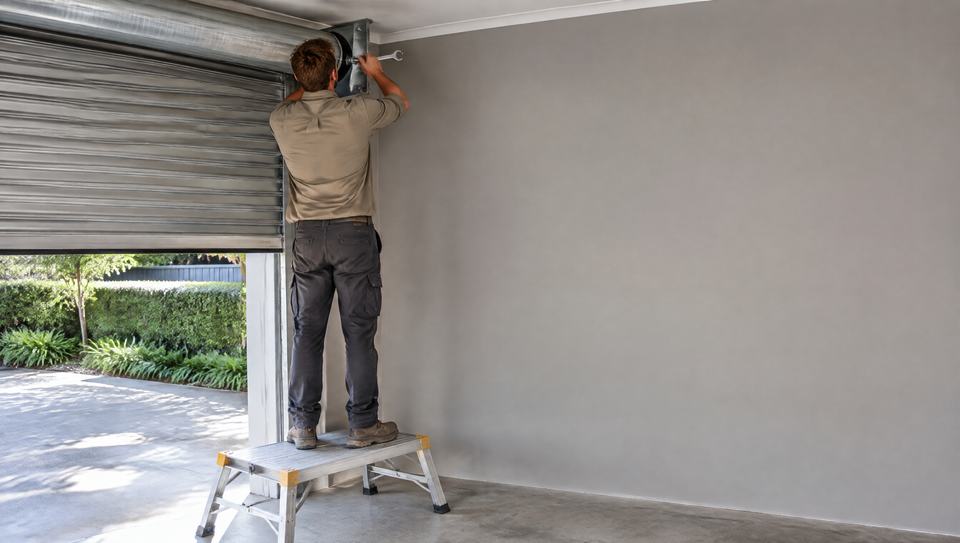
A roller door is a metal curtain wound around a drum, with helical springs balancing the weight. B&D's Smart Pro manual says it is natural for springs to lose tension over time, so plenty of roller door repairs come back to balance rather than the curtain.
Steel-Line lists the signs: a door that fails to stay up, rolls up loosely, strains the motor, is hard to open or slams shut. It says a door like that is out of balance and needs its tension set by a professional, who re-checks the balance afterwards.
Stop using the door if you notice these
- A loud bang, then a door that feels much heavier: B&D lists both as signs of a broken spring
- A door that lifts crookedly, which is also on B&D's list
- A motor that hums or strains while the curtain stays down
- A curtain that has left a side guide, or a guide that has bent
- A door that comes down hard or will not stay where you leave it
Keep spanners away from the drum
Steel-Line's instruction to owners is: 'Do not attempt to tension your Roller Door, at risk of serious injury or death.' It says loosening the U-bolts can release the spring tension and bring the door down forcefully. B&D adds that the tension in spring coils can cause serious injury if released improperly.
A curtain out of its guides
A curtain that has jumped a side guide looks like it just needs a push back into place. B&D says otherwise: 'Do NOT attempt to lift the door back onto the guiderails on your own', because springs or cables may be broken. Leave it where it stopped and keep children and pets away. The stuck or off-track guide covers what to do while you wait.
Wind can be the cause. The Cyclone Testing Station's report on Cyclone Yasi says many roller doors first came out of their side guides, then came off the drum, and that doors fitted with wind locks did better than doors without them. If a storm did the damage, ask the door specialist whether wind locks suit your door, and read about cyclone-rated doors if you live in the north.
Stiff, noisy or rubbing: what goes in the guides
Grease is the usual mistake. B&D's care guide says never to use grease or oil in roller door guides, and that a silicon spray may be used after cleaning. Steel-Line makes the same point about tracks: grease attracts dirt and dust. Wipe the guides out first, and see whether the door still drags.
Seals wear as well. Steel-Line doors carry a PVC weather seal in the aluminium bottom rail, with an optional brush seal for the side guides. If water or leaves are getting in, mention it when the door specialist calls.
Rust and salt on a roller door
Steel-Line's coastal care article says rust commonly affects hinges, springs and tracks, and that homes many kilometres inland can still see faster corrosion. Salt is the obvious cause, and it names sand and even sunscreen as well.
BlueScope says the parts rain does not reach, including the top of a garage door, need hosing with clean fresh water at least every six months, and more often where salt spray is common. If rust has started on the guides or the bottom rail, show the door specialist before it spreads.
Repair the roller door or replace it?
Steel-Line says that with proper maintenance a roller door can last 15-20 years or more, and B&D rates the springs on its Roll-A-Door at 30,000 cycles. A younger door with a single fault is a fair candidate for repair. An old door with rust in the guides, a tired curtain and weak springs may be better replaced, so ask the door specialist to look at the whole door.
Check the warranty before anyone starts. Steel-Line says its warranty is invalidated if products are not serviced at least annually by Steel-Line or an approved service partner. B&D's warranty depends on a service within the first 12 months, then at least once every two years. Gliderol recommends an authorised Gliderol distributor or technician every 24 months for its residential roller doors.
Useful to tell the door specialist
- The door's brand, if you can see it, and roughly how old it is
- The width and height of the opening
- Whether it has a motor, and what the motor does
- Whether the fault happens every time or only some of the time
- What came just before it: a storm, a bump from the car, building work
- Whether the door is stuck open, stuck shut or still moving
Yours to do, and what to leave
You can
- Hose the curtain with clean fresh water
- Wipe dirt out of the side guides
- Keep grease and oil out of the guides
- Note what the door does, and when
Leave to a door specialist
- Tension, springs and anything on the drum
- A curtain out of its guides
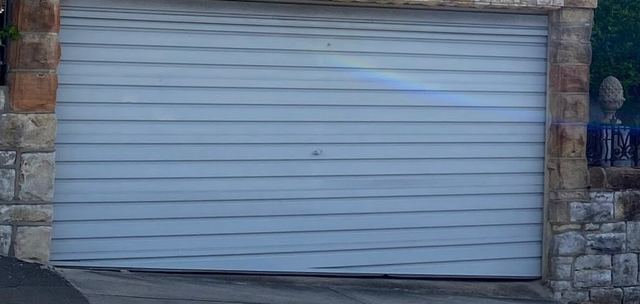
- Bent guides or a badly dented curtain
- Motor faults, with any new wiring by a licensed electrician

What we would do
If the door could still be under warranty, find the papers before anyone touches it. Steel-Line and Gliderol both name who should service their doors, so ask the door specialist how the repair sits with your warranty before they start. If the door is well past its warranty, note the brand anyway, because finding the right parts starts there.