
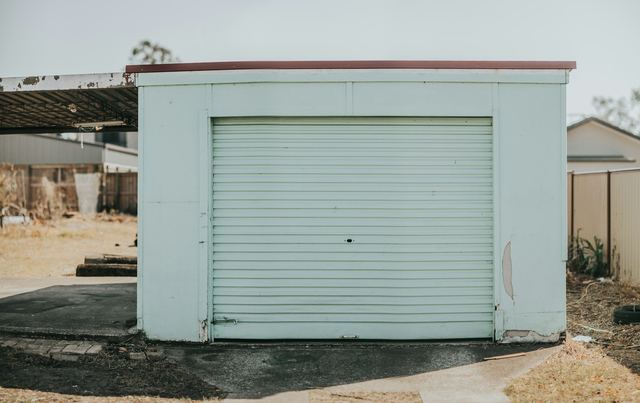
Garage door not opening: is it the door or the opener?
Listen when you press the button. If the opener is silent, the likely causes are the power, the remote or the wall button, and all three are safe to check. If the motor hums or strains and the door barely moves, B&D counts that among the signs of a broken spring, and it is time to stop pressing.
If the door moves and then reverses, runs crooked, or has something hanging loose, the fault is in the door itself. Each of those has its own section below.
If the door is off its track
A roller or a panel that has jumped out of its guide can look as if it just needs a push back in. B&D's advice is plain: 'Do NOT attempt to lift the door back onto the guiderails on your own', because the springs or cables may be broken. Stop using the opener, keep people and cars clear, and leave the door exactly where it is.
Safe checks you can do
- Try the wall button as well as the remote. If the button works and the remote doesn't, start with the remote's battery.
- Check the opener's plug and the power point switch, and whether the rest of the house has power.
- Look along both sides of the door for anything in its way, such as a bike, a box or a ladder leaning on the track.
- If your door has safety beams near the floor, make sure nothing is across them. B&D says a blocked beam stops the door.
- In a blackout, read opening a garage door without power before you touch the release cord.
Stop and leave it if you see
- The door hanging crooked, with one side higher than the other
- A roller or a panel edge sitting outside its track
- A lift cable hanging loose, frayed or snapped
- A gap in a spring, or a bang from the garage just before the door stopped
- A roller door curtain bunched or buckled inside its guides
A door that starts to close, then goes back up
That can be the door doing its job. B&D says its openers stop and reverse if the door touches something, and that a blocked infrared beam pauses or reverses it too, so look for anything in the doorway first.
If the doorway is clear, look at the tracks. Steel-Line's sectional door manual says a noisy door, or one that reverses while closing and returns to open, can mean the tracks and hinges need cleaning, and it names brick dust from new building work as a common cause.
B&D's manual suggests cleaning inside the guide tracks every 3 to 6 months with a cloth dampened with mineral turps or methylated spirits. Steel-Line adds that oil and grease belong nowhere near the tracks, since grease there gathers dirt and dust.
A roller door that won't stay up or drops down
Steel-Line lists the signs of a roller door out of balance: it fails to stay up, rolls up loosely, strains the motor, is hard to open or slams shut. Getting it right is a tension adjustment by a professional, who then checks the balance again.
Steel-Line is blunt about trying it yourself: 'Do not attempt to tension your Roller Door, at risk of serious injury or death.' It says loosening the U-bolts can release the spring tension and send the door down with force.
What to do now
Stop pressing the button
Each extra try makes the motor pull against a door that is stuck or broken. B&D's advice when a spring breaks is the same: stop using the opener straight away.
Keep the doorway clear
Move people, pets and anything you can reach safely away from the door, and never walk under it while it is part open.
Run the safe checks
Power, the remote battery, the wall button and the beams. If one of those was the cause, the door should run normally once it is sorted.
Think before using the release
Merlin warns that an open door can fall rapidly when its springs are weak or broken, so leave the release cord alone unless the door is fully closed.
Tell us the job, marked urgent
If the door is stuck open or off its track, choose the urgent option. The door specialist who takes the job sees that flag before they ring you.
Handy details for the door specialist
- Is it a roller, a sectional (panel lift) or a tilt door?
- Did it stop open, shut or halfway, and is a car inside?
- Anything you noticed: a bang, grinding, a cable dangling, a panel out of line
- The opener's brand, if the label is readable from the floor
- Whether a car or trailer bumped the door before it stuck
What you can do, and what to leave
You can
- Check the power, the remote, the wall button and the beams
- Wipe grit and brick dust out of the tracks on a door that still runs
- Photograph the problem from a safe distance
Leave to a door specialist
- Putting a door back on its track
- Springs, lift cables and cable drums
- Roller door tensioning
- A bent track, a damaged bottom rail or a cracked panel

What we would do
If the door came off its track after a car nudged it, say so when you tell us the job. A bent track or bottom rail is a different repair from a worn roller, and knowing the cause up front helps the door specialist plan the visit.