
Which opener suits your door
Openers are made for a type of door. B&D sells separate roller door and sectional door openers, and Merlin has its own ranges for roller, sectional and tilt doors, so the first question is always what kind of door you have.
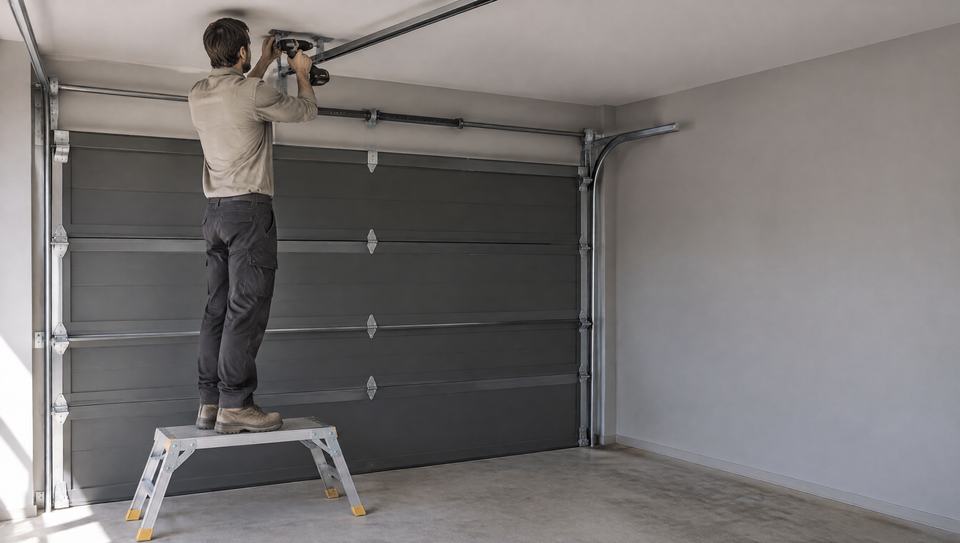
A roller door opener usually sits on one side of the opening, beside the rolled-up curtain. Gliderol's Rollamatic is tucked inside the roll itself and suits residential roller doors up to 12 square metres. Sectional and tilt door openers run along a rail in the middle of the ceiling.
Weight matters too. Steel-Line's SD1500 Pro uses a belt drive for sectional doors up to 210 kg and a chain drive from 210 to 250 kg, so a heavy timber or double door can need a stronger drive than a light single one.
The power point near the ceiling
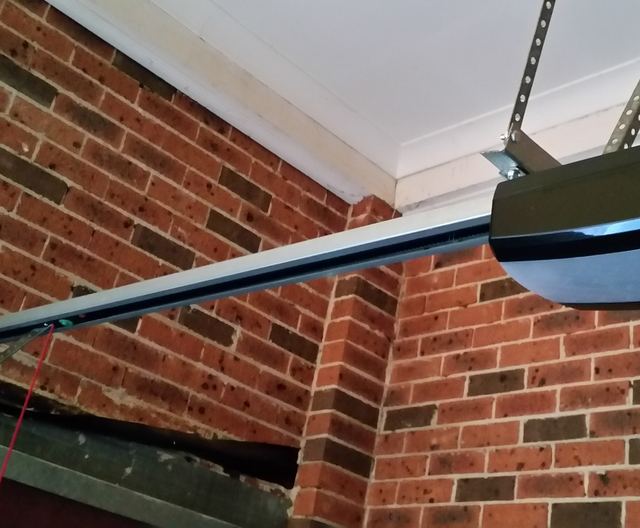
Most openers plug into a power point on the ceiling close to the motor. B&D's Smart Pro manual asks for a properly earthed 3 pin power point within an arm's length of the opener, put in by a qualified electrical contractor.
If there is no power point up there, or the opener is to be hard-wired, that part is electrical work. In every state electrical work needs the right electrical licence, so a licensed electrician does it. Say whether there is a power point near the ceiling when you tell us the job, so the door specialist knows before they call.
Safety features worth asking about
- Auto-reverse: B&D says all its openers stop and reverse if the door touches something on the way down.
- Safety beams: an infrared beam across the opening stops a closing door when something breaks it. B&D's manual puts the beam 100mm above the ground.
- Smart phone control: B&D says a change to the standard made safety beams compulsory with smart opener devices from 1 December 2020.
- Battery backup: some openers have it built in and others take an add-on, so the door still works in a power cut.
- A wall button out of reach: Steel-Line's manual says at least 1.6 metres from the floor, where you can see the door close.
A monthly test that takes a minute
Steel-Line's manual says to test the reversing feature every month: lay a 70 to 100 mm thick piece of wood flat in the door's path and close the door. If the door does not reverse when it hits the wood, stop using the opener and have it repaired.
What you can check yourself
You can
- Swap the remote battery and try the wall button
- Check the opener is plugged in and the power point is switched on
- Look along the tracks for anything in the door's way
- Run the monthly reversing test above
Leave to a door specialist
- Fitting, programming or replacing the motor
- Anything to do with the springs or cables
- A door that jams halfway or is off its track
- A new power point or hard wiring, done by a licensed electrician

What we would do
Before you choose a new motor, find out whether the door itself is healthy. B&D's manual says a door run by hand with the opener disengaged should move smoothly and need no more than 20kg of force at the bottom rail. A door that is heavy or sticky by hand wears out any motor, so mention it and the door specialist can look at both at once.