
After a big storm
Newcastle sits right in the path of the big east coast blows. Gusts reached 135 km/h here in the April 2015 East Coast Low, and a door that takes a hit like that can come out of its tracks, hang crooked or jam part way.
If that happens, leave it where it is. B&D's advice for a door off its guide rails is not to lift it back on yourself, because a spring or cable may have broken and could hurt you. Keep cars and children clear until a door specialist has seen it.
Sand, salt and grinding tracks
Near the beaches, grit is behind a lot of the noise. Steel-Line says salt water and sand can corrode a garage door, and that rust tends to show first on the hinges, springs and tracks.
A sectional door that grinds, or turns back on its way down, sometimes needs nothing more than clean tracks and hinges, Steel-Line's manual says. Wipe the tracks rather than oiling them: the same manual says grease there just collects dirt and dust.
Signs it is a spring or a cable
- A loud bang from the garage, then a door that feels far heavier
- The opener hums or strains but the door does not lift
- A visible gap in a spring, or coils that look stretched
- The door lifts unevenly, higher on one side
- Frayed or broken strands on a lift cable
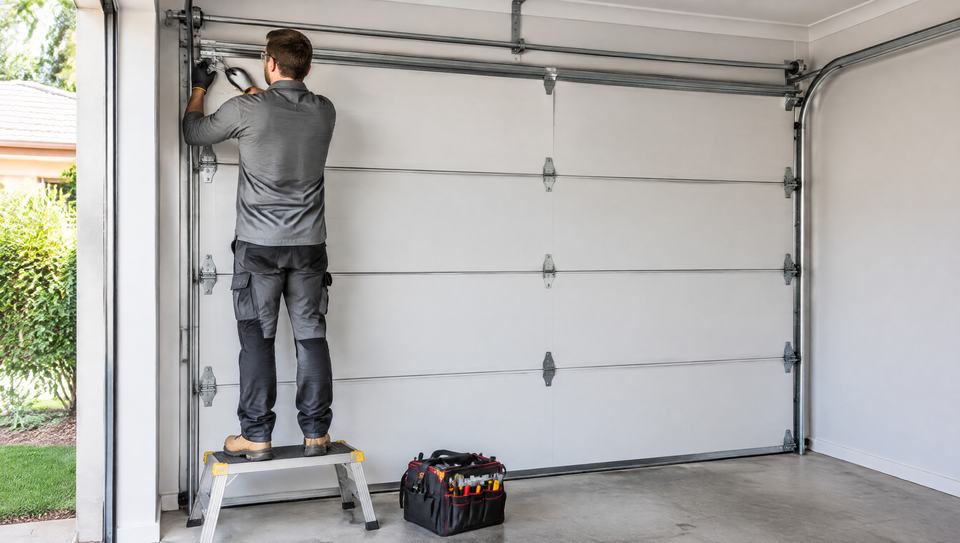
Springs and cables are never a DIY job
Steel-Line says spring forces are roughly equal to the door's weight and are released violently if a spring breaks while it is wound or stretched. B&D says to stop using the opener as soon as a spring goes, because running the door can strain the motor, the cables and the tracks.
Garage door service in Newcastle
A regular service catches most of this early. Steel-Line's sectional door manual says preventive maintenance should be done at least every six months, more often if conditions call for it, and B&D recommends a service every two years for its sectional doors.
Between visits, B&D's Smart Pro manual suggests disengaging the opener now and then and running the door by hand. It should move smoothly and need no more than 20kg of force at the bottom rail. If it needs more, stop using it and book the repair.
Repairs around Newcastle
Near the water
For coastal homes Steel-Line suggests lubricating the door's moving parts at least twice a year, or every three months for the best results.
Towards Maitland
Inland the bigger worry is water: the April 2015 storm brought hourly rainfall of 100 to 150 millimetres to parts of the lower Hunter. B&D says an opener has to sit in a dry spot protected from weather, so mention it if the garage has flooded.
Blackouts
More than 200,000 homes reportedly lost power between Sydney and Newcastle in the June 2007 storm. If your opener has no battery backup, make sure everyone at home knows where the release cord is.
What you can do, and what to leave
You can
- Hose salt and sand off the door and wipe out the tracks
- Test the auto-reverse each month with a block of wood on the floor, as Steel-Line's manual describes
- Try a new remote battery and the wall button before booking an opener repair
Leave to a door specialist
- Broken springs, frayed cables and roller door tension
- A door that is off its track or hanging crooked
- Any new power point, which is a licensed electrician's job

What we would do
After a storm, take photos of the door from inside and outside before anyone touches it. They show the door specialist exactly how it is sitting, and they help if you later make an insurance claim.