
Swing or sliding, on the driveway you have
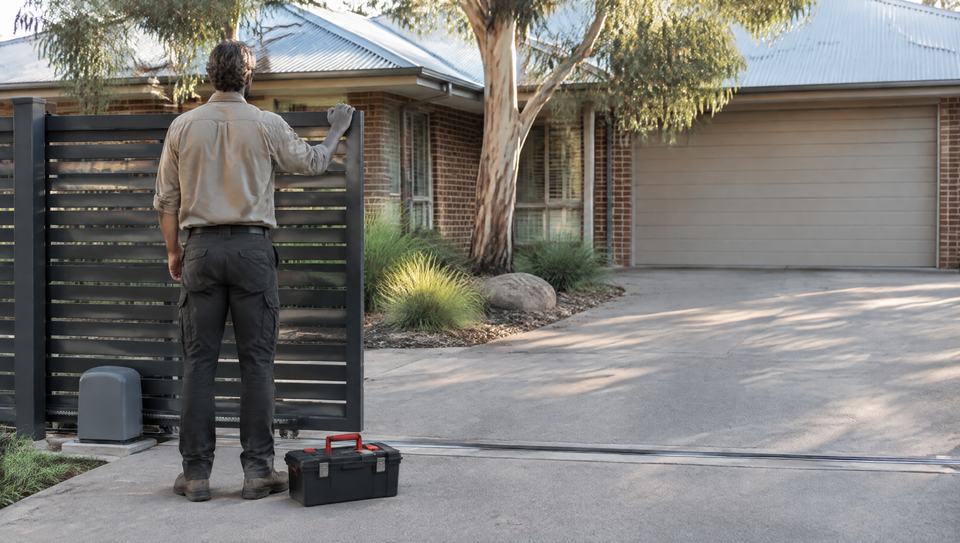
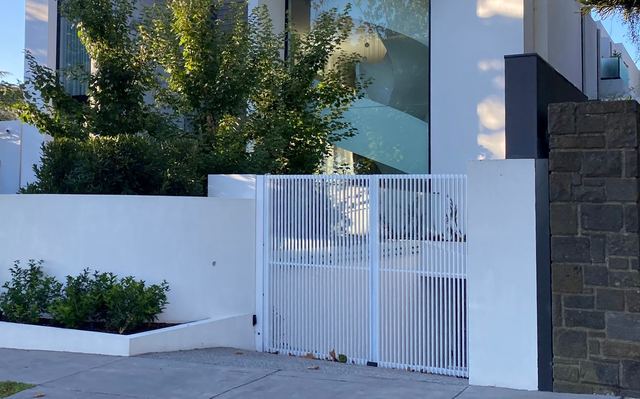
A swing gate needs a clear arc to open into. On a driveway that rises from the street, the leaves can meet the slope before they open fully, so the ground decides a lot. A sliding gate runs along the fence line on a ground track and needs a straight, level run beside the opening instead.
For swing gates, CENTSYS's V-Series SMART motors are piston operators with a 400mm or 500mm stroke, and Merlin sells the Swing L300, Swing A200 and Swing LR 500. For sliding gates the motor is matched to the gate's weight: CENTSYS rates its D5-Evo for gates up to 500kg.
Power and Tasmania's wiring rules
Tasmania's electrical regulations make all electrical work prescribed work, so running mains power out to a gate is a job for a licensed electrician. Tasmania's Determination says the same: where otherwise low risk building work includes electrical work, a licensed electrician does that part.
Once the new circuit is switched on, the licensed electrician must give you a copy of the approved record form. Keep it with the gate's manual. Some motors avoid the trench altogether: CENTSYS says the D5-Evo and V-Series SMART can run off a solar supply, with batteries that keep them going in a power cut.
Beams and obstruction sensing
An electric gate can crush. CENTSYS says the D5-Evo detects obstructions for anti-crushing protection and that its alarm functions need safety beams fitted, and Merlin will not run a gate through its myQ app without Safety IR Beams. Teach children that the gate is not a ride.
Gates around Hobart
Water on the driveway
In May 2018 flash flooding swept cars away in South Hobart. If water runs across your driveway in heavy rain, say so, because a sliding gate motor and its controls sit low.
Bushfire-prone land
On land on the council's bushfire overlay, make sure everyone at home knows how to release the gate by hand, so you can get out if the power fails.
The standard
AS/NZS 60335.2.103:2024 covers the safety of electric drives for household gates.
Your part and theirs
You can
- Keep the track, or the swing arc, clear of leaves and stones
- Watch the gate open and close fully once a month
- Know where the manual release key is kept
Leave to a door specialist
- Choosing the motor for the gate's weight and the slope
- Setting the limits and obstruction sensing
- New power to the gate, by a licensed electrician

What we would do
Walk the gate through its full swing or slide by hand before anyone quotes, and note where it catches or drags. A gate that already fights the ground will fight a motor too, and fixing hinges or wheels first is what makes the motor last.